
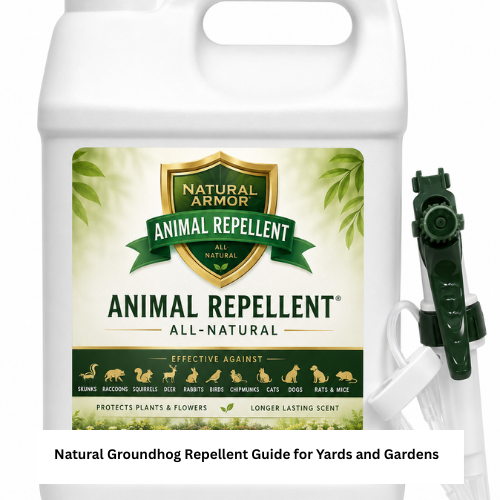
A natural groundhog repellent can help homeowners and gardeners protect lawns, vegetable beds, flower beds, sheds, and outdoor areas without starting with harsh control methods. The right natural groundhog repellent should match the area you want to protect, the type of groundhog activity you see, and the safety needs of your family, pets, and plants.
Groundhog problems often start with feeding damage, fresh burrow openings, chewed plants, or disturbed soil near sheds and garden edges. Before choosing a repellent, inspect the yard, identify active paths, and verify product directions, coverage area, weather limits, and safe-use instructions.
Why Natural Groundhog Repellent Matters
Natural groundhog repellent products are often used by buyers who want a humane pest control option before considering stronger exclusion or removal methods. These products may rely on scent, taste, motion, sound, or other deterrent approaches, depending on the product type.
A natural repellent should be part of a full yard protection plan. Repellents work better when combined with garden cleanup, fencing, blocked access points, and regular monitoring.
How to Choose Natural Groundhog Repellent
Natural groundhog repellent should be selected by location, plant type, weather exposure, burrow activity, and whether the area is used by children or pets. Do not choose a repellent only by product name because formulas, coverage, and use directions can vary.
Before buying, check:
- Target animal listed on the product
- Garden or lawn use directions
- Safe-use instructions around pets and children
- Rain and watering limitations
- Scent strength
- Coverage area
- Reapplication schedule
- Plant compatibility
- Storage directions
- Return policy
| Repellent Type | Best For | Buyer Benefit | Limitation | Verify Before Buying |
| Scent-based repellent | Garden edges and burrow paths | Helps create avoidance zones | May need reapplication | Weather and coverage instructions |
| Spray repellent | Plants, edges, and targeted areas | Easy to apply to specific zones | May wash away after rain | Plant safety and label directions |
| Granular repellent | Yard borders and soil areas | Good for perimeter use | May need wider coverage | Application rate and safety notes |
| Motion sprinkler | Open garden areas | Adds surprise deterrent | Needs water setup | Sensor range and hose fit |
| Fence barrier | Vegetable beds and sheds | Physical protection | Requires setup | Height, depth, and gap control |
Natural Woodchuck Repellent and Yard Protection
Groundhogs are also called woodchucks, so product labels may use either name. A natural woodchuck repellent can be useful when the listing clearly supports outdoor animal deterrent use and provides safe application instructions.
For broader yard protection, start with the areas where groundhogs enter, feed, or dig. Apply repellents near vulnerable zones instead of randomly treating the entire yard.
A yard protection plan should include removing fallen produce, checking burrow entrances, protecting young plants, and monitoring fresh damage.
Smell Based Repellent and Humane Pest Control
Many natural deterrents use scent because groundhogs rely on smell when moving through outdoor spaces. A smell based repellent may help discourage activity around plants, paths, and edges, but it should be refreshed according to the product instructions.
A humane pest control approach should avoid harmful methods and focus on prevention, exclusion, and safe deterrent use.
For product comparison, review peppermint repellent options and verify target animals, application area, weather limits, ingredients, and return policy before buying.
Garden Setup Tips Before Applying Repellent
Before applying repellent, clean the area. Remove fallen vegetables, weeds near fence lines, and loose debris where groundhogs may hide or feed.
Apply product only where the label allows. Avoid overapplying near edible plants unless the product specifically supports garden use. If the product detail is not clear, verify before buying.
Groundhog repellent users should also check burrow openings near sheds, decks, fences, and garden borders.
Compatibility Notes for Lawns, Pets, and Plants
A safe animal repellent should be checked for use around pets, children, vegetables, flowers, and lawn areas. Do not assume every natural product is safe for every surface or plant.
If you grow edible vegetables, read the label carefully. Some repellents may be designed for perimeter use rather than direct plant application.
Cleaning, Storage, and Maintenance
Repellents need ongoing attention. Rain, irrigation, plant growth, and soil movement can reduce coverage.
Maintenance tips:
- Reapply as directed after rain or watering
- Store products away from children and pets
- Keep containers sealed
- Wash hands after use
- Check treated areas weekly
- Refresh barriers around new plantings
- Combine repellents with fencing when damage continues
Common Buying Mistakes
Avoid these mistakes:
- Buying without checking target animal
- Assuming “natural” means safe for all plants
- Applying too little around active areas
- Ignoring rain and watering directions
- Treating only after heavy damage
- Skipping fence or barrier support
- Not checking return policy
Troubleshooting Repellent Problems
If groundhogs return quickly, check whether rain washed away the repellent, whether food sources remain, or whether the burrow is still active nearby.
If plants continue to be eaten, add barriers, protect young plants, and recheck application placement. If damage is severe, contact a licensed wildlife professional or local extension resource for safe local guidance.
Practical Buying Checklist
Before buying, confirm:
- Size or fit: Product coverage matches your yard, garden, beds, or shed area
- Compatibility: Suitable for lawns, plants, soil edges, or perimeter use
- Safety: Label directions around pets, children, and edible plants are clear
- Material or build quality: Container, sprayer, granules, or stakes look suitable
- Setup or installation: Application steps are easy to follow
- Maintenance: Reapplication and storage instructions are clear
- Warranty: Verify before buying
- Return policy: Check before ordering
- Replacement parts: Verify sprayer heads, refill options, stakes, or containers if listed
- Delivery or support: Confirm arrival before peak garden damage
- Verify before buying: Do not assume target animal, coverage, safety, or weather resistance
Conclusion
A natural groundhog repellent can support safer yard and garden protection when it is matched to the problem area, product directions, and plant safety needs. For best results, combine natural groundhog repellent with cleanup, fencing, monitoring, and humane prevention steps.
FAQ
What is a natural groundhog repellent?
It is a deterrent designed to discourage groundhog activity using non-lethal methods such as scent, taste, motion, or barriers.
Is natural repellent safe for vegetable gardens?
It depends on the product. Always verify label directions before applying near edible plants.
How often should I reapply groundhog repellent?
Follow the product label. Rain, watering, and heavy activity may require reapplication.
Can repellent stop burrowing?
Repellent may help reduce activity, but active burrows often need exclusion, monitoring, and professional advice if severe.
What should I verify before buying?
Verify target animal, coverage, plant compatibility, pet safety, weather limits, return policy, and application directions.
